10 Day Spectacular Safari in Tanzania's Best National Parks
Tanzania Safari Holiday
This ten-day spectacular safari unveils to you the best of Tanzania. From the unforgettable wildlife galore to the cultural experiences, it will surely take your breath away. You will visit all northern circuit national parks, where you will see the Big 5 and also the spectacular migration depending on the date of travel.
Key information
- Starts and ends in Arusha
- English-speaking guide
- Park fees included
Highlights
- Explore amazing Tanzania's national parks: Serengeti, Tarangire, Lake Manyara, etc.
- Get to see all the wildlife galore that Tanzania has to offer
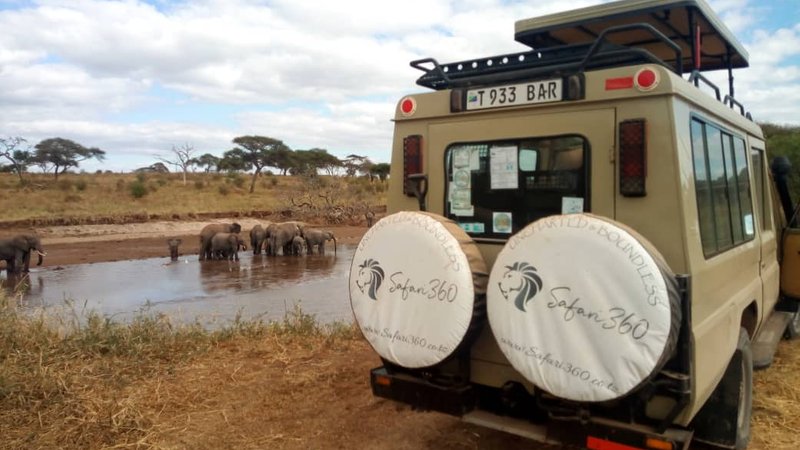
- Safari Jeep with pop-up roof for game viewing
- Enjoy beautiful scenery and landscapes
- Experience the Hadzabe Bushmen who are the last true hunter-gatherers in East Africa
- Get a glimpse at the traditional Maasai village life
- 9 nights accommodation
Types
9 activity days in English
Accommodation
Accommodation in tented camps and lodges.
Program
Day 1: Tarangire National Park
After a safari briefing in the morning you head to the Tarangire National Park. Giant baobab trees, bush savannah, and the seasonal marshes add to the wonder of this nature reserve.
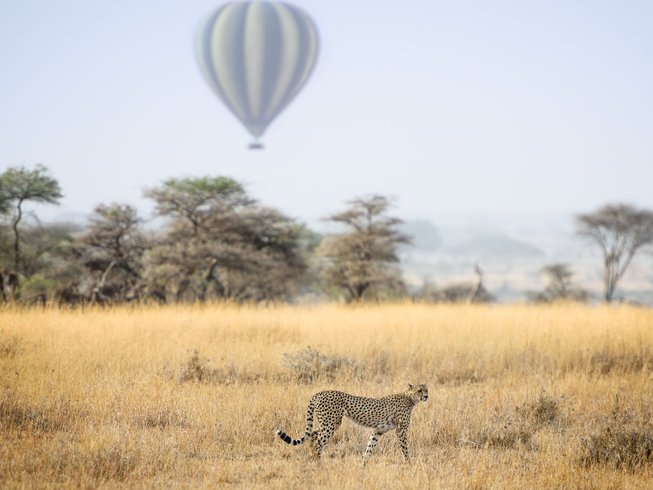
The park is considered one of the best places to view elephants up close. The park is also home to buffaloes, zebras, and wildebeests, which are always closely followed by a range of predators such as lions. Leopards are seen now and then, but cheetahs are rarely spotted.
From the open roof of the safari vehicle you will be able to absorb the landscape and watch the animals. In the late afternoon you will leave the park and drive to the lodge, where you will overnight.
Dinner and overnight as per the standard and type of accommodation option requested.
Day 2: Lake Manyara National Park
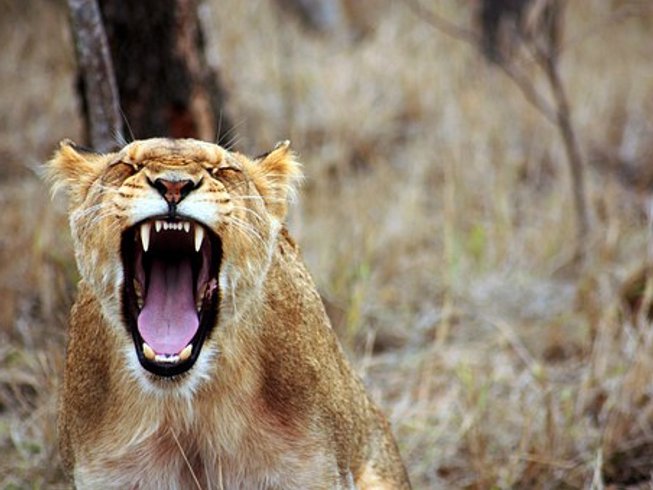
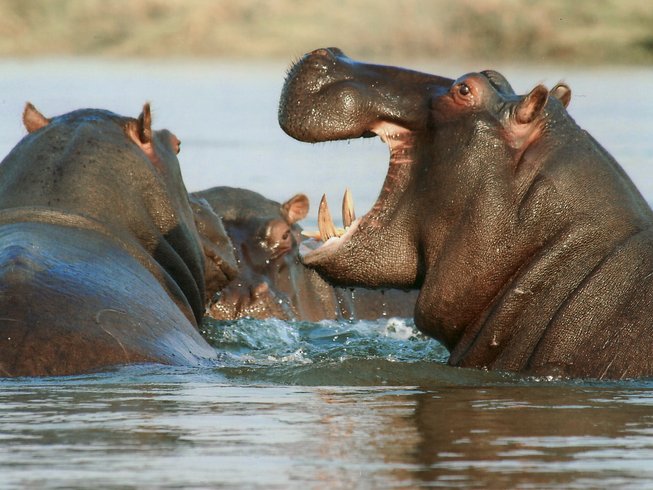
After breakfast, you head to Lake Manyara National Park. The park is dominated by the lake of the same name, which attracts large colonies of waterbirds. Particularly impressive are the pink-colored flamingos, but also many other bird species, such as cormorants, pelicans, or storks, can be observed here. A total of about 400 different bird species live in the park. The park is also famous for its tree-climbing lions, which are usually found in the central and open part of the park. During the safari you will also see elephants, zebras, giraffes, buffaloes, hippos, and many other animal species.
In the late afternoon when you leave the national park, you will spend the night at a lodge in Lake Eyasi.
Dinner & overnight as per the standard and type of accommodation option requested.
Day 3: Lake Eyasi (Hadzabe Bushmen, Datoga Tribe)
After an early breakfast you will drive to Lake Eyasi. The Hadzabe Bushmen are the last true hunter-gatherers in East Africa; around the lake live about 700-800 tribesmen in small groups. The Hadzabe live almost the same way as their ancestors in the Stone Age. They hunt animals with bows and arrows and collect fruits, roots, and honey from the baobab trees.
After a welcome and an insight into the village life, the program proceeds with some men on a common hunt. The hunt takes place at a fairly fast pace, especially when an animal is spotted. The Hadzabe hunt antelopes and gazelles, but also smaller animals such as birds and mongooses.
In the late morning you will visit the Datoga tribe. These pastoralists are also skilled blacksmiths. They collect metal scrap, which they cleverly process into bracelets, arrowheads, and knives. You also have the opportunity to visit one of the huts in the village. Here you can watch the women grind flour from corn, from which later bread is baked.
In the late afternoon you will return to Karatu. On the way back you can enjoy the impressions of your safari and the unique visit to the Hadzabe Bushmen and Datoga.
Dinner & overnight as per the standard and type of accommodation option requested.
Day 4: Traditional Village Maasai Experience
After breakfast you head to Mto wa Mbu. You will be able to discover the traditional life of the Maasais, their culture, their traditions, and visit their bomas (groupings of huts of an extended family).
On arrival at the village, expect to be greeted in the traditional manner: plenty of singing and dancing, with participation very much encouraged! There is then the opportunity to learn about some of the customary practices such as fire-making and beadwork. You may also get the chance to meet and speak to villagers in their homes—questions are very welcome, and your guide will happily interpret if needed. During your visit, there is also the opportunity to purchase handmade leather and beadwork from the villagers. Once your time in the village has come to an end, you will head back to the lodge for the night.
Dinner & overnight as per the standard and type of accommodation option requested.
Day 5: Serengeti National Park
After an early breakfast, you head towards the Serengeti. On adventurous slopes it goes from the Rift Valley up into the wide plains of the Serengeti. The park was already founded in 1951 and is thus the oldest one in Tanzania. He is the heart of a vast ecosystem whose species-rich animal world is unique in the world. Together with the Ngorongoro Conservation Area and the Maasai Mara National Reserve in Kenya, the Serengeti National Park is one of the largest natural migration systems for wild animals.
Annually, between the three mentioned conservation areas migrate over 1.4 million gnus, almost 300,000 Thomson's gazelles, about 200,000 zebras, and several thousand topi with the rainy seasons to the areas with the greener and lusher meadows.
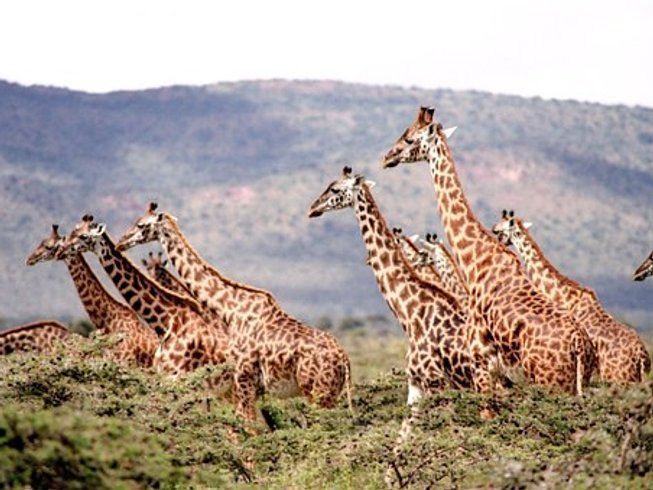
With about 3 million larger mammals, the Serengeti is the national park with the richest wildlife worldwide. Around two-thirds make up the above-mentioned animal species; furthermore, the park is the home to many other animal species, such as giraffes, buffalo, hyenas, elephants, or crocodiles. Particularly large is the population of feline predators: about 3000 lions, a good 300 cheetahs, and an estimated 400-700 leopards have their hunting ground here.
Dinner & overnight as per the standard and type of accommodation option requested.
Day 6: Serengeti National Park
You do an after-breakfast game viewing drive along the Sogore River Circuit, which loops into the plains south of the Seronera River and which is good for possible lion, Thomson gazelle, topi, ostrich, and cheetah sightings.
The visitor’s center is not far from the Serengeti Seronera area and is well worth a visit after the morning’s game drive. This nicely designed center offers some interesting wildlife displays as well as a gift shop selling information leaflets and maps of the area. The center also has a shop where cold drinks and snacks can be purchased, as well as a picnic area and information trail up and around a nearby kopje. You will enjoy a relaxed picnic lunch at the center in the shade of the giant acacia trees.
In the afternoon, you will follow the Kopjes Circuit, which goes anti-clockwise around the Maasai Kopjes, which usually attract a number of lions and some formidably large cobras. Kopjes are weathered granite outcrops, scattered around the plains, most of which are miniature ecosystems, providing shade and drinking water in pools left in the rock after the rains. This makes the kopjes particularly good for spotting wildlife in the dry seasons—including lions, which like to lie in wait for animals coming to drink!
Dinner & overnight as per the standard and type of accommodation option requested.
Day 7: Serengeti National Park
This day is completely peppered with further game drives in the Serengeti. In the evening you will return with many impressions of this long day back to your tented camp in the Serengeti.
Dinner & overnight as per the standard and type of accommodation option requested.
Day 8: Serengeti National Park – Karatu
This morning you will continue with further game drives in the Serengeti; at noon you will leave for Karatu. On your outward journey to the park gate, you will enjoy some more game viewing before you leave the Serengeti National Park in the early afternoon to continue your journey to the Ngorongoro Conservation Area. As soon as you reach the edge of the Ngorongoro Crater, you will see the giant caldera below—a breathtaking view. You will leave the Ngorongoro Conservation Area and drive to Karatu in the Ngorongoro highlands.
Dinner & overnight as per the standard and type of accommodation option requested.
Day 9: Ngorongoro Crater
Before breakfast, you can enjoy the fantastic view over the Ngorongoro crater in good weather. After breakfast it goes on partly adventurous roads about 600 meters downward into the crater. The crater has a diameter of 17-21 kilometers and is the home of a great animal world. Nearly all the biodiversity of the East African savannah has gathered here; only giraffes and a few other animal species for which the rock faces are too steep do not live in the crater.
Depending on the season, 15,000 to 25,000 animals are gathering here, of which more than two thirds are buffaloes, gnus, zebras, and gazelles. This large number of grazers also explains why in the crater the largest density of predators in Africa can be found. Besides other predators, more than 100 lions live here in several prides. The chances of watching the "Big Five"—lion, elephant, buffalo, rhino, and leopard—within just a few hours are here particularly good.
In the afternoon it goes up again the steep crater walls and then to Karatu for dinner & overnight.
Dinner & overnight as per the standard and type of accommodation option requested.
Day 10: Karatu to JRO
After a leisurely breakfast, you will travel back to Arusha, where you will arrive around midday. You will be dropped off at the Kilimanjaro International Airport for your flight back home.
Location
This safari tour takes place in some of the best national parks in Tanzania: Tarangire National Park, Lake Manyara National Park, Lake Eyasi, Serengeti National Park, and Ngorongoro Crater.

Food
You will enjoy full-board meals while on safari.
The following meals are included:
- Breakfast
- Lunch
- Dinner
The following dietary requirement(s) are served and/or catered for:
- Regular (typically includes meat and fish)
What's included
- 9 nights accommodation
- Full board whilst on safari
- Private safari guide
- Safari jeep with pop-up roof for game viewing
- Transfers in both directions between Kilimanjaro International Airport & Arusha
- All entrance park fees
What's not included
- Tanzania visa
- Tips
- Personal expenses
- Optional tours
- Flights
- Insurance
How to get there
Recommended Airports
Transfer included
Kilimanjaro International Airport
43 km away from your destination
Cancellation Policy
- A reservation requires a deposit of 20% of the total price.
- The deposit is non-refundable, if the booking is cancelled.
- The rest of the payment should be paid on arrival.

Reviews
No reviews yet
For this organizer you can guarantee your booking through BookAllSafaris.com. All major credit cards supported.